Crawl Space Encapsulation and Structural Stabilization for a Commercial Law Office Building
Challenge
Preserving a 4,000-Square-Foot Historic Commercial Building in Columbus, MS
Client: Rob G. (Building Owner)
Tenant: Crowell, Gillis & Cooper Law Firm
Location: Columbus, Mississippi
Building Size: 4,000 sq ft
Services: Crawl space encapsulation, drainage, and floor stabilization with support jacks
The Problem: Moisture, Rot, and Structural Deterioration in an Aging Commercial Building
This commercial building—now home to a long-established law firm—was purchased outright by the owner with a clear goal: preserve the structure through preventative maintenance rather than wait for failure.
The crawl space revealed multiple critical issues:
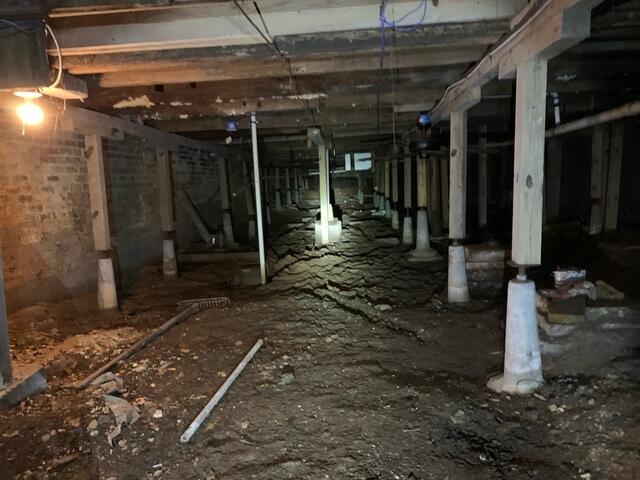
- Chronic moisture and high humidity
- Extensive mold and mildew growth
- Soft, rotting floor joists and subfloor sections
- Warped and uneven floors above
- Outdated and improvised structural repairs (“patched and rigged” woodwork)
- Inoperable moisture-control equipment, including unplugged dehumidifiers and non-functioning pumps
The building’s original construction added complexity. The floor system consisted of true 2x12 old-sawmill joists embedded into brick walls, many of which had been previously altered with undersized 2x10 replacements, notching, and partial sistering. These repairs addressed isolated points but left large unsupported and deteriorating spans in between.
If left unaddressed, moisture-driven rot and structural weakening would continue—putting the building’s longevity, tenant operations, and stored legal records at risk.
The Goal: Stop the Rot, Control Moisture, and Stabilize the Floors
The owner understood that full joist and subfloor replacement would eventually be needed but chose a strategic, phased approach:
- Stop moisture at the source
- Encapsulate the crawl space
- Stabilize the floors where possible
- Slow further deterioration and preserve the building
Encapsulation was identified as the top priority, paired with structural support to reduce deflection and load stress.
Solution
The Solution: Crawl Space Encapsulation with Supplemental Structural Support
A comprehensive solution was designed to address both environmental and structural issues, without removing existing support work.
Systems and Methods Installed
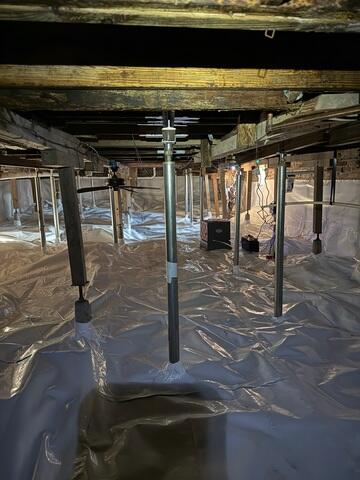
- CleanSpace® Crawl Space Encapsulation System
Fully sealed the crawl space to block ground moisture, reduce humidity, and create a controlled environment. - Drainage Matting
Installed beneath the vapor barrier to manage ground moisture and direct water safely away. - 44 Adjustable Support Jacks
Strategically placed to: - Support sagging floor systems
- Reinforce weakened joists and beams
- Reduce movement in warped floors above
- Supplemental Beam Support
Additional support added beneath a high-load area near the first-floor copier and file storage, addressing concentrated weight concerns.
Rather than removing previous repairs, the system supplemented existing structural work, minimizing disruption while improving overall stability.
The Process: Working Within a Tight, Challenging Crawl Space
The crawl space presented logistical challenges:
- Limited access through an 18” x 24” floor hatch
- Tight clearances ranging from 3 to 5 feet
- Heavy mold presence and pest activity
- Minimal lighting
Despite these conditions, two crews worked efficiently to complete:
- Full encapsulation and drainage matting installation
- Placement and setup of all 44 support jacks
- Beam and joist adjustments to ensure proper load transfer
At the client’s request, final jack adjustments were made during the walkthrough, including shaving select 2x12s to ensure proper contact with beams and connectors. The team remained onsite an additional day to ensure every detail met expectations.
The Results: Moisture Control, Floor Stability, and Long-Term Preservation
- Crawl space fully sealed against moisture intrusion
- Active protection against future rot and mold growth
- Floors stabilized at their current condition, reducing further sagging
- Improved load support in high-traffic and storage areas
- A cleaner, drier, and healthier crawl space environment
While the building will eventually require deeper structural restoration, this project dramatically extended the life of the existing floor system and halted the primary cause of deterioration.
The owner was satisfied with the outcome and appreciated the preventative approach—protecting both his investment and his tenants’ workspace.
Why These Methods Matter: Encapsulation as Preventative Maintenance
For older commercial buildings, moisture is often the silent destroyer. Crawl space encapsulation combined with structural stabilization:
- Stops rot before it spreads
- Reduces long-term repair costs
- Improves indoor air quality above
- Preserves historic and legacy structures
- Buys time for planned, phased renovations
This approach is especially effective for commercial properties that cannot afford downtime or major reconstruction all at once.
Call to Action: Protect Your Commercial Building Before Damage Escalates
If your commercial building shows signs of moisture, mold, sagging floors, or structural deterioration, waiting only increases repair costs.
Schedule a professional crawl space inspection today to learn how encapsulation and structural support can preserve your building, protect your tenants, and extend the life of your investment—before minor issues become major failures.
Project Summary
Team Lead: Dalton
Team Lead: Ebed