Crawl Space Structural Repair in Starkville, MS: Stabilizing Settlement, Floor Sagging, and Main Beam Damage
Challenge
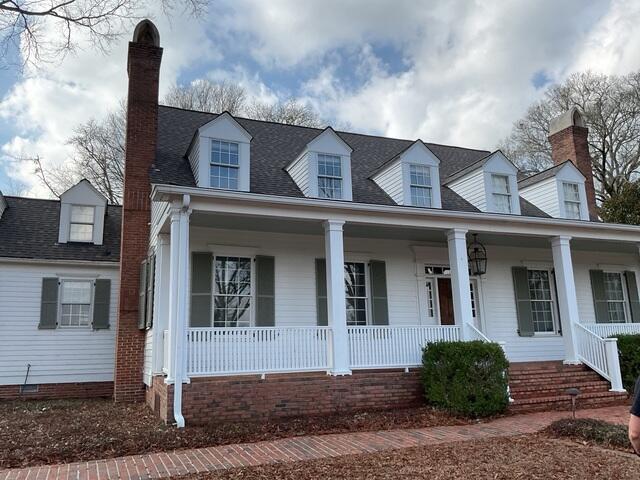
When a home is being prepared for sale, structural issues can quickly become a major obstacle. In Starkville, MS, a realtor representing out-of-state homeowners contacted Redeemers Group after visible settlement and crawl space concerns raised questions about the home’s condition, safety, and marketability.
The home had settling issues, a difficult-to-access crawl space, sagging floors, a bowed front room, and structural concerns near the fireplace and porch. Because the homeowners lived in Alabama and were relying on their realtor to coordinate the project, the repair plan needed to be clear, practical, and flexible enough to support the sale process.
The Problem: Crawl Space Settlement, Sagging Floors, and Structural Movement
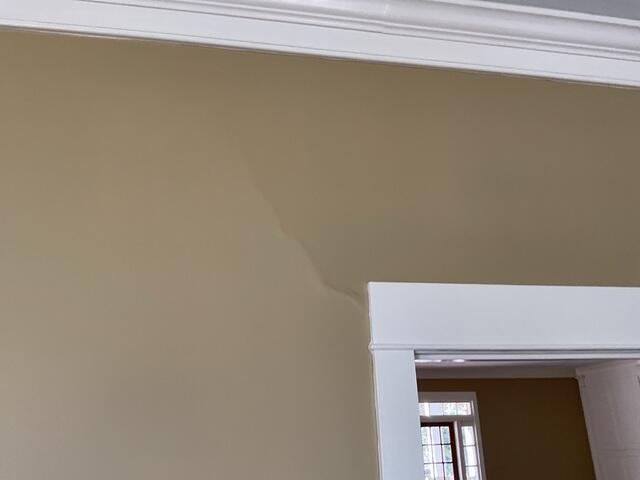
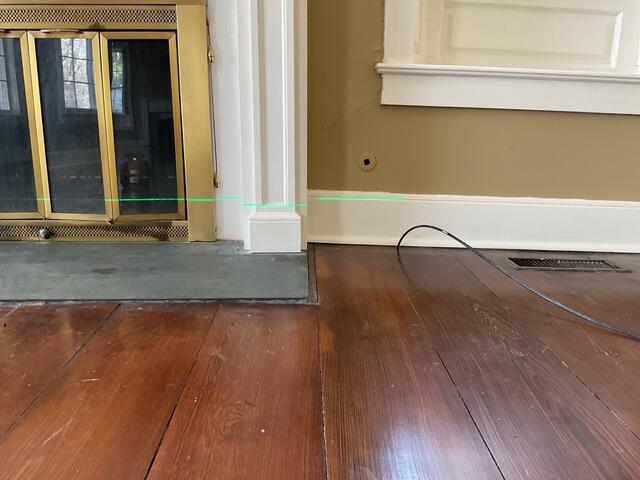
The most noticeable issue was in the front room near the fireplace. When walking into the home and looking left, the floor and window area showed visible bowing. A laser measurement revealed a significant elevation change across the room. Near the fireplace, the floor measured approximately 5 inches from the laser reference point, while the west wall measured approximately 8 1/4 inches. That indicated about 3 1/4 inches of drop toward the west wall.
That kind of floor drop can point to several possible structural concerns, including foundation settlement, crawl space support failure, overspanned floor joists, moisture-damaged wood, or a combination of issues.
The crawl space inspection also revealed several complicating factors:
- The crawl space had very tight access points.
- HVAC ducts blocked parts of the crawl space.
- Existing insulation limited visibility.
- There was possible hidden wood damage under the insulation.
- The front rooms and foyer had overspanned floor joists.
- The structure had previous competitor piers and heavy underpinning.
- Thick clay soil and large amounts of concrete complicated the exterior work.
This was not a simple crawl space repair. It required both exterior foundation stabilization and interior structural support.
Why Crawl Space Access Matters During Structural Repair
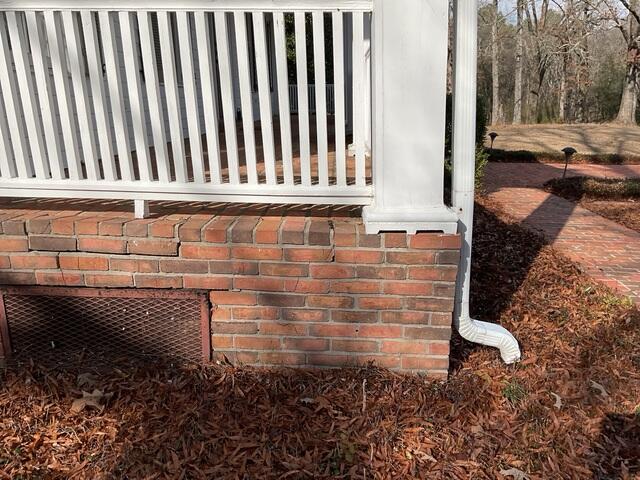
One of the biggest challenges was access. The easiest crawl space entry points were two small doors on the east side of the house, just west of the front porch near the chimneys. Another access point existed on the west side, but HVAC ducts made it difficult to move very far inside.
Limited access matters because a contractor cannot responsibly promise full repair details for areas they cannot inspect. In this case, the inspector advised that some areas could not be fully evaluated because insulation and ductwork were blocking access. The customer was also made aware that rotted wood could be discovered after insulation removal.
That transparency is important. Crawl space repair often requires adapting once hidden conditions become visible. A strong repair plan should account for what is known, what is suspected, and what may need to be addressed once the work begins.
Solution
The Solution: Helical Piers, SmartJacks, Beam Replacement, and Wood Protection
Redeemers Group designed a repair plan that addressed both the foundation settlement and the crawl space support problems.
The solution included helical piers on the exterior, SmartJack crawl space supports, insulation removal, wood replacement, and LumberKote protection. Each method served a specific purpose in stabilizing the home and improving the structural condition of the crawl space.
Helical Piers for Exterior Foundation Settlement
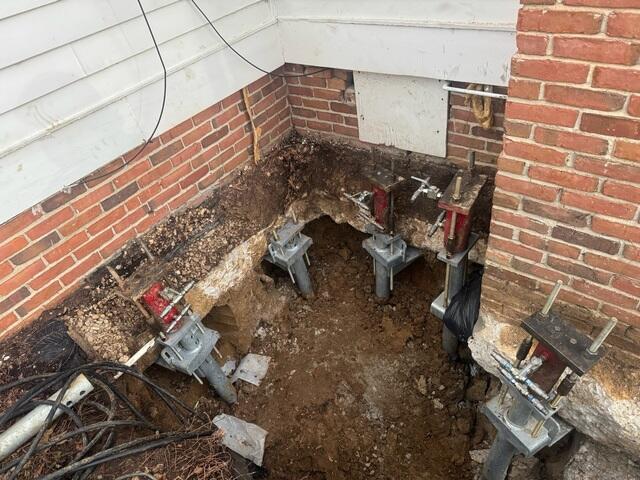
The crew installed helical piers to stabilize areas of the foundation affected by settlement. During installation, they encountered competitor piers and significant underpinning that had to be removed before the new helical piers could be installed properly.
The soil conditions were difficult. The crew found thick clay, heavy concrete, and areas where concrete extended more than 7 feet deep and approximately 6 feet from the wall in some places. Because of the amount of concrete and limited working room, the crew had to trench much of the job.
Even with these complications, the team was able to install the piers and achieve some lift on the chimney and porch.
Why Helical Piers Were Important for This Starkville Foundation Repair
Helical piers are used to transfer structural loads to deeper, more stable soil. For a home with visible settlement, chimney movement, porch settlement, and signs of structural failure around the house, helical piers can help prevent continued movement by supporting the foundation from below.
In this project, the exterior work was especially important because the home already had failed or insufficient previous repair attempts. Removing competitor piers and working through heavy underpinning added complexity, but it also allowed the crew to install a system designed for the actual conditions they found on site.
SmartJacks for Crawl Space Floor Support and Overspanned Joists
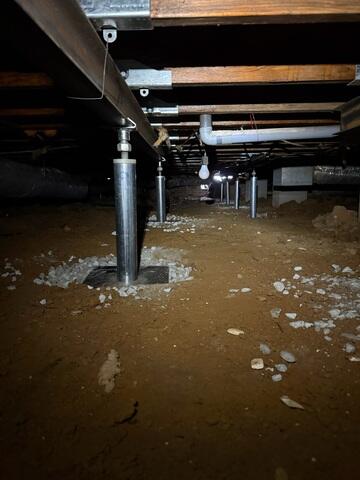
Inside the crawl space, the inspection found overspanned floor framing in the front rooms and foyer. The span was approximately 15 feet, with 2x10 floor joists. Overspanned joists can contribute to sagging, bouncing, bowing, and uneven floors.
To address this, SmartJack supports were included along the east side of the home to help reduce the impact of the overspan. Additional SmartJacks were also added in the front room area to help improve the bowed floor condition as much as possible.
SmartJacks are adjustable steel crawl space supports designed to stabilize sagging beams and floor joists. They are especially useful when floors need additional support from below.
Main Beam Replacement and Structural Wood Repair
During installation, the team replaced approximately 9 feet of main beam. The existing main beam was a triple-stack 2x12 beam, and the joists were also 2x12.
The repair area included plumbing, water lines, a waste line, and many electrical wires. Originally, the team planned to add two additional CMU block piers. However, because water lines were located in that area, they pivoted to two standalone jacks to ensure the new wood was supported properly from load point to load point.
This kind of field adjustment matters. In crawl space structural repair, the best solution is not always the one that looks simplest on paper. Plumbing, electrical, ducts, access limitations, and existing framing often require experienced installers to adapt while still protecting the structural goal of the repair.
LumberKote Application After Wood Replacement
After the replacement wood was installed, the crew applied LumberKote. LumberKote is used to help protect wood components in crawl spaces, especially in environments where moisture, humidity, or previous damage are concerns.
This was an important step because the project involved existing insulation, limited crawl space visibility, and potential hidden wood deterioration. Applying a wood protection product after replacing damaged structural lumber helps support the long-term durability of the repair.
Insulation Removal and Crawl Space Conditions
The plan also included approximately 3,000 square feet of insulation removal. Removing old crawl space insulation can make it easier to identify hidden wood damage, improve access, and prepare the crawl space for additional repairs or future improvements.
The customer had also considered crawl space encapsulation. However, there was an important limitation: the HVAC ducts were resting too low and would need to be lifted into the floor cavity before encapsulation could be completed properly. The customer was advised that reworking or reinstalling the ductwork could potentially add $10,000 to $15,000 to the project.
That recommendation was important because encapsulation is not just a cosmetic upgrade. A proper crawl space encapsulation should be installed around a space that is accessible, prepared, and free of obstructions that prevent a complete moisture control system.
Installation Challenges: Thick Clay, Heavy Concrete, and Previous Foundation Repairs
This Starkville project required significant problem-solving. The crew encountered:
- Thick clay soil
- Large amounts of concrete
- Competitor piers
- Heavy underpinning
- Limited working space
- Deep concrete obstructions
- A heavy structure that limited lift results
- Plumbing and electrical obstacles in the crawl space
- HVAC ducts that restricted access
Backfilling also took longer than expected because of the amount of displaced dirt and concrete. Despite those challenges, the crew completed the project and stabilized the key areas of concern.
The Result: Improved Structural Support for a Home Preparing to Sell
Redeemers Group was able to complete the crawl space structural repair, replace damaged beam sections, install additional supports, apply wood protection, and stabilize exterior settlement areas with helical piers.
The home had significant challenges, including tight crawl space access, old repairs, heavy concrete, thick clay soil, and structural movement near the fireplace, chimney, porch, and front room. By combining exterior foundation stabilization with interior crawl space support, the repair plan addressed the home’s settlement from multiple angles.
For a home being prepared for sale, this kind of structural repair can help reduce uncertainty for buyers, realtors, and homeowners. It also provides documentation that the issue was evaluated and repaired by a professional foundation and crawl space repair contractor.
Why the Right Repair Method Matters
Not all crawl space and foundation problems can be solved with one product. In this case, the home needed a combination of solutions because the symptoms had more than one cause.
Helical piers helped address exterior foundation settlement. SmartJacks helped support overspanned and sagging floor framing. Beam replacement restored damaged structural wood. LumberKote helped protect the new wood. Insulation removal improved access and visibility. Together, these methods created a more complete repair than a single-service approach would have provided.
That is why a thorough inspection matters. A crawl space may show floor sagging, but the real problem could involve settlement, overspanned joists, moisture-damaged wood, poor access, previous failed repairs, or hidden damage behind insulation.
Call Redeemers Group for Crawl Space Repair in Starkville, MS
If your home has sagging floors, settlement cracks, crawl space moisture, damaged beams, uneven floors, or foundation movement, Redeemers Group can help identify the cause and recommend the right repair plan.
Schedule a crawl space or foundation inspection today to get a customized solution for your home in Starkville, MS, or the surrounding area.
Project Summary
Team Leader: Dalton
Team Leader: Mike