
Foundation Repair Before & After Photos
Click on a photo to enlarge.
Crawlspace Structural Repair & Foundation Stabilization in Mountain Home, AR
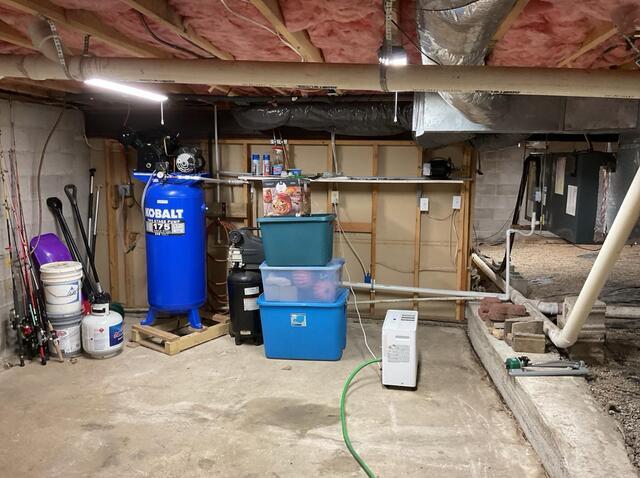
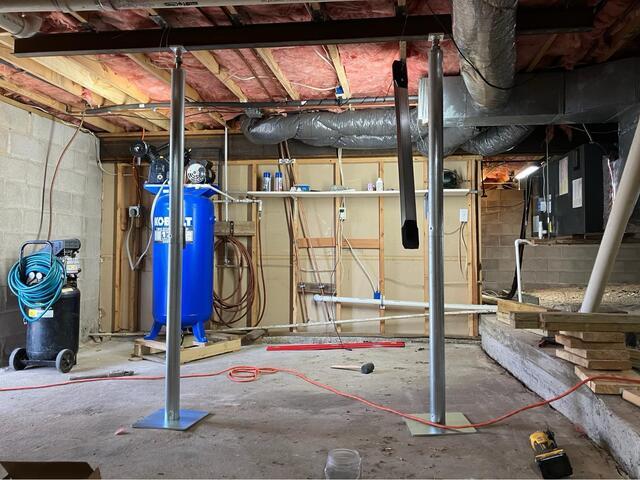
Foundation Settlement and Structural Instability Threatened Home Integrity
Significant foundation settlement and inadequate structural support caused visible drywall cracking and ongoing floor instability, requiring a comprehensive stabilization and waterproofing solution to prevent further damage.
Over the course of a year, the homeowner in Mountain Home, AR began noticing cracks forming in the drywall—clear signs of foundation settlement and structural movement. The home’s design relied on a single center fly-over steel beam, leaving large sections of flooring and load-bearing walls unsupported. This lack of proper support led to sagging floor joists, uneven load distribution, and increasing concern as the homeowner prepared for future renovations. A crawlspace and basement combination further complicated the issue, requiring a customized approach to avoid obstructing key access points like the basement doorway and storage areas.
SmartJack System, Push Piers, and Custom Beam Installation Delivered Lasting Stability
To address the structural issues, a tailored solution was implemented using a combination of SmartJack support systems, supplemental beams, joist sistering, and foundation push piers. A 30-foot supplemental beam was installed along both the front and rear of the home, supported by strategically placed SmartJacks—six in the front to address heavier load demands and four in the rear. Joist sistering reinforced weakened spans, particularly under high-traffic areas like the bathroom, while adjustments were made near the storage room to preserve accessibility without compromising structural integrity.
Additionally, eight push piers were installed along the southeast corner to permanently stabilize the settling foundation—five from inside the crawlspace and three requiring exterior concrete removal and replacement. The team overcame challenging excavation conditions, including large subsurface stone, and adapted installation methods where necessary. Minor customizations, such as shimming select joists to reduce floor noise, were completed at the homeowner’s request while maintaining transparency about best practices.
Integrated Waterproofing and Encapsulation Enhanced Long-Term Protection
Beyond structural stabilization, the project incorporated advanced waterproofing and encapsulation strategies to protect the home from future moisture-related damage. A CleanSpace vapor barrier system was installed throughout the crawlspace and basement walls, seamlessly integrated with a Dry-Trak drainage system to channel water into a new sump pump system. The discharge line was upgraded with a Spee-D drain to redirect water away from the driveway, improving both function and curb appeal.
This integrated approach ensured not only immediate structural correction but also long-term durability by addressing underlying moisture concerns—a critical factor in preventing future foundation issues. The combination of engineered support systems, customized installation methods, and moisture control solutions provided a comprehensive repair that restored stability and peace of mind for the homeowner.
Schedule Your Foundation Inspection Today
If you’re noticing cracks in your drywall, uneven floors, or signs of foundation settlement, don’t wait for the problem to worsen. Contact our team today to schedule a professional inspection and discover customized solutions designed to protect your home for years to come.
Closing the Cracks: Foundation Repair in Conway, AR
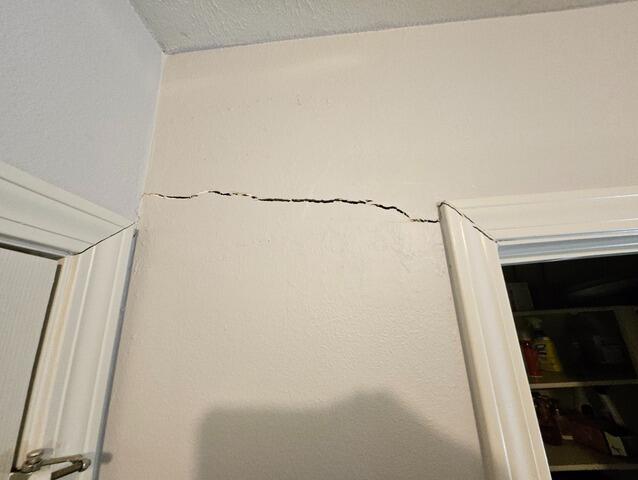
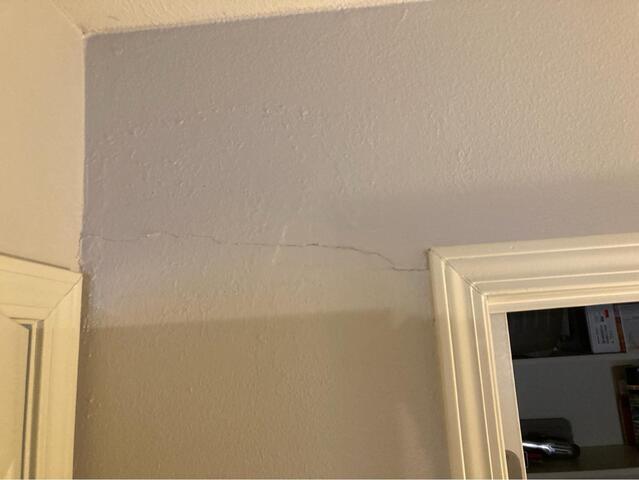
Anna B. of Conway, AR had been living with a serious concern—a large interior wall crack that kept growing as her foundation settled. Along with the visible damage, doors stopped shutting properly, and the structural issues threatened to worsen if left untreated. Like many homeowners in Central Arkansas, Anna faced both water drainage problems and shifting soil beneath her home.
To solve the problem, our team created a comprehensive repair plan. We first installed downspout extensions to direct water away from the home, helping stop future washout. Then we installed 13 push piers to lift and permanently stabilize the foundation, followed by PolyLevel® foam injections to fill voids created during the lifting process. This three-step method provided deep stabilization and long-term protection.
The results were dramatic. The large interior wall crack that had worried Anna closed completely, restoring the strength and appearance of her home. Doors that once stuck now opened smoothly, and the entire structure was secured against future settlement. Anna was thrilled with the transformation, and her home now stands strong for years to come.
Call to Action: If you see cracks forming in your walls or doors that won’t close, don’t wait until the damage gets worse. Contact us today for a free foundation inspection in Conway, AR and let our proven Push Pier and PolyLevel® solutions restore your home.
Concrete Steps Lifted and Stabilized in Little Rock, AR Using Helical Piers and PolyLevel


Kris A. of Little Rock, AR noticed a troubling shift in his front concrete steps. Once slightly off-level by just two inches, the steps had now sunk to a dangerous four-inch drop, creating both a safety hazard and an eyesore. Concerned about further settling and potential damage, Kris reached out for a permanent solution that would restore stability and function to his home’s entryway.
To correct the issue, our team designed a precise repair plan. We installed two helical piers—one on each side of the staircase—to support the failing concrete from deep, load-bearing soils below. Once the steps were carefully lifted back into place, we injected PolyLevel, a high-density polyurethane foam, beneath the concrete. This advanced material filled any voids and created a stable, supportive base to prevent future sinking. Prior to the repair, Kris relocated two bushes near the stairs to allow access, and he plans to complete the landscaping after the work is done.
The repair was executed efficiently with our equipment set up on the driveway, minimizing disruption to the surrounding property. The result is a level, secure staircase that’s both safer and more attractive. If you’re dealing with sinking concrete steps or uneven walkways in the Little Rock area, contact us today to schedule your free inspection and get the lasting results you deserve with PolyLevel and helical pier technology.
Brick Retaining Wall Stabilized in Little Rock, AR
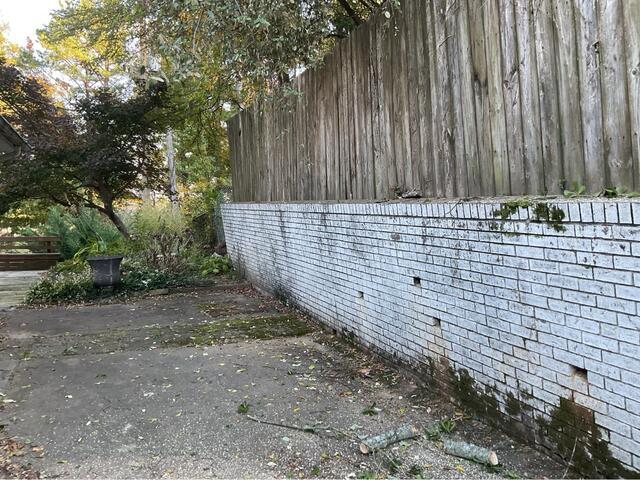
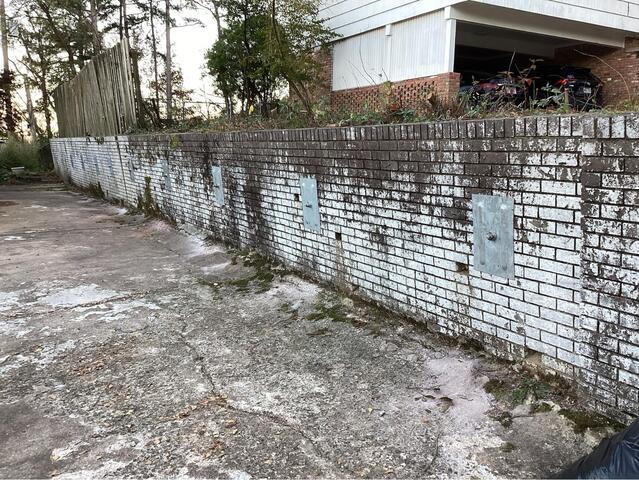
Failing Retaining Wall Created Structural Concerns
Stacey H. of Little Rock, AR had been living with growing concerns about her 72-foot-long, 5-foot-tall brick retaining wall. After a previous waterproofing project left her disappointed, she wanted a fresh evaluation and reassurance that the original quote and recommendations were still valid. The wall showed signs of movement and lacked proper support, creating risks for both her property and the nearby yard space between her home and her neighbor’s.
GeoLock® Wall Anchors Installed to Restore Stability
During the inspection, our team confirmed that the wall required stabilization using a series of GeoLock® Wall Anchors. With 14 feet of workable area on the homeowner’s side and 22 feet of space in the neighboring yard, our crew carefully installed the anchors despite rocky soil, large roots, and challenging ground conditions. While the wall did not shift significantly during installation, we successfully achieved approximately a quarter inch of movement—an important first step in long-term structural correction.
Proven Methods Deliver Reliable, Long-Term Support
This project was especially meaningful because the homeowner had previously felt dissatisfied with their experience. By approaching this repair with clear communication, precision, and professionalism, our team fully regained that trust. The GeoLock® system provided the durable, high-strength reinforcement needed to protect the wall for years to come, ensuring peace of mind for a growing family and restoring confidence in the repair process.
Ready to Stabilize Your Retaining Wall or Foundation?
If you’re seeing signs of wall movement, cracking, or bowing, now is the time to act. Contact Redeemers Group today for a professional inspection and permanent repair options you can trust.
Proactive Lintel Repair and Decorative Driveway Stabilization in North Little Rock, AR
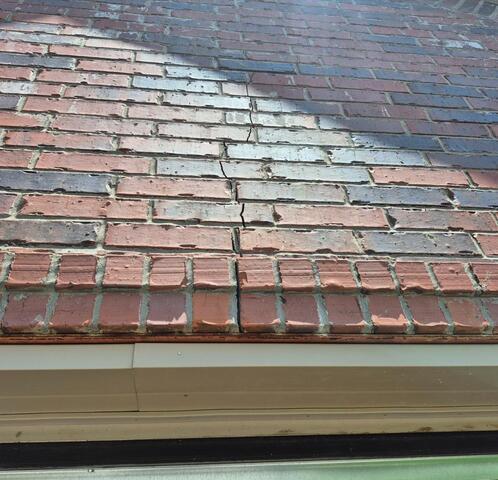
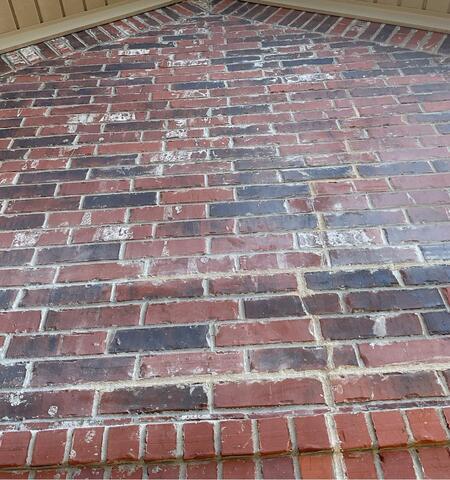
Clifford N. of North Little Rock, AR, reached out to us with two key concerns: a shifting lintel above his garage door and a beautifully designed yet cracking driveway. During our consultation, we explained that the lintel issue was currently in Phase 1, the earliest and most cost-effective stage of failure. Clifford watched our educational videos and understood the urgency — if left unaddressed, this could escalate into Phase 2, potentially requiring thousands more in repairs. By acting now, he’s avoiding further damage and reinforcing the structural integrity of his garage.
In addition, Clifford’s driveway — a mix of striking dark and light gray stain — had started to show signs of cracking. Though the decorative finish still looked impressive, it was vulnerable due to underlying instability. We showed Clifford our PolyLevel® demonstration, which clearly illustrated the cause: voids and soil movement beneath the slab. To restore stability and prevent future damage, we’ll inject PolyLevel beneath the affected sections. Then, using NexusPro®, we’ll seal all cracks and joints to protect the surface and extend the life of the driveway.
Because of the custom color scheme of Clifford’s driveway, we emphasized that while the repair color may not match perfectly, our expert crew will blend it as closely as possible. Their attention to detail and finishing expertise will ensure the final result maintains the aesthetic of his home while providing long-term strength. If you're noticing early warning signs in your concrete or structural components, now’s the time to act — contact us for a free inspection and let’s protect your home together.
our service area
We serve the following areas
- Adona
- Belleville
- Bigelow
- Bismarck
- Bluffton
- Bonnerdale
- Briggsville
- Caddo Gap
- Casa
- Center Ridge
- Centerville
- Clinton
- Cotter
- Danville
- Dardanelle
- Dennard
- Donaldson
- Gassville
- Gravelly
- Hattieville
- Havana
- Hot Springs National Park
- Hot Springs Village
- Jerusalem
- Jessieville
- Midway
- Morrilton
- Mount Ida
- Mountain Pine
- Norman
- Oden
- Ola
- Paron
- Pearcy
- Pencil Bluff
- Perry
- Perryville
- Plainview
- Plumerville
- Roland
- Rover
- Royal
- Scotland
- Sims
- Solgohachia
- Springfield
- Story
- Cleveland
- Houston